
10 Benefits of Outsourced Bookkeeping
Key Highlights
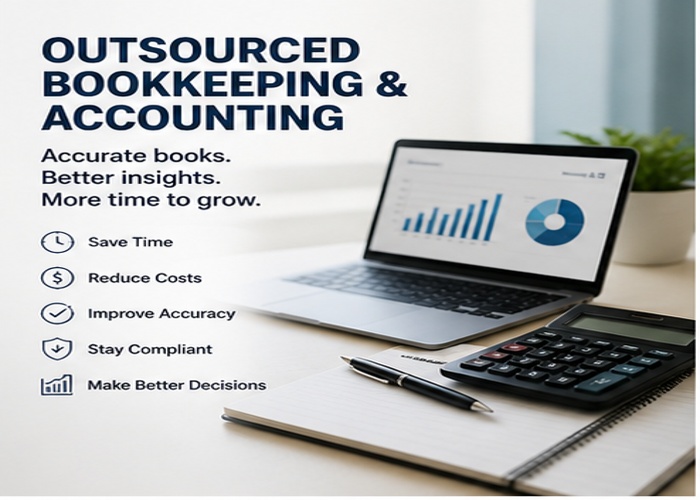
- Outsourced accounting services free up your valuable time, letting you concentrate on business growth.
- Partnering with a provider offers substantial cost savings compared to hiring a full-time, in-house employee.
- You gain access to a team of financial experts who can provide crucial financial insights.
- Professional bookkeeping services enhance the accuracy of your financial records and reduce errors.
- Outsourcing streamlines tax preparation and helps ensure your business remains compliant.
- Scalable solutions adapt to your company's changing needs as you expand.
Overview
As a small business owner, you juggle countless responsibilities to keep your company running smoothly. Managing your finances is critical, but bookkeeping can be a time-consuming and complex task that pulls you away from your core operations. For many small business owners, handling accounting services in-house becomes a significant burden. Outsourcing your bookkeeping services can be a practical solution, offering expert support that helps you maintain accurate financial records and gain valuable insights without the overhead of an in-house team.
10 Key Benefits of Outsourced Bookkeeping and Accounting
Deciding to hand over your financial tasks to an outsourced accounting firm is a significant step with numerous advantages. When you partner with an external accounting team, you're not just offloading tedious work; you're making a strategic move that can positively impact your entire business. These benefits go beyond simple convenience.
From cost savings to impr
oved decision-making, the value of professional bookkeeping services can be felt across your operations. Let's explore the key benefits that an outsourced accounting team can bring to your company.
1. Greater Focus on Core Business Priorities
One of the most si
gnificant benefits of outsourcing for business owners is the ability to reclaim your time. Instead of getting bogged down by daily accounting tasks like categorizing transactions and chasing receipts, you can redirect your energy toward activities that drive business growth
, such as product development, marketing, and customer service.
This shift in focus is crucial for any small business looking to expand. When you and
your internal teams are free from the complexities of financial administration, you can concentrate on the strategic initiatives that truly matter for your company's future.
By delegating bookkeeping responsibilities to a dedicated team, you empower yourself to work on your business, not just in it. This allows for more innovation and a clearer path to achieving your long-term goals.
2. Access to Professional Financial Expertise
When you partner with accounting firms for your bookkeeping, you gain immediate access to a team of experts with specialized knowledge. These professionals are well-versed in financial management principles and can offer a level of expertise that might be difficult to find or afford in a single in-house employee.
This access to a team of experts means your accounting needs are handled by professionals who understand industry-specific challenges and compliance requirements. Their experience can help you navigate complex financial situations with confidence.
Beyond standard bookkeeping, some firms also offer advisory services, providing insights that support better financial planning and strategy. This expert guidance can be invaluable for making informed decisions that steer your business in the right direction.
3. Enhanced Financial Accuracy and Fewer Errors
Maintaining accurate records is the foundation of sound financial management. When you outsource, you entrust your books to professionals who are trained to ensure precision, significantly lowering the risk of errors that can lead to costly consequences.
An outsourced team uses best practices and often utilizes modern accounting software to produce reliable financial statements. This dedication to accuracy in financial reporting means you can trust the numbers you're seeing, from your profit and loss statement to your balance sheet.
Fewer mistakes in your books translate to more reliable data for tax filings, loan applications, and strategic planning. This consistency provides peace of mind and a solid financial footing for your business.
4. Improved Cash Flow Management
Understanding and controlling the flow of money in and out of your business is vital for survival and growth. Outsourced bookkeeping services play a key role in improving cash flow management by providing timely and accurate financial insights into your company's financial health.
With up-to-date records, you can easily monitor your accounts receivable and payable, identify spending trends, and spot potential cash shortages before they become critical issues. This clarity allows you to make smarter business decisions regarding your financial operations, such as when to make large purchases or pursue new investments.
Ultimately, better cash flow management gives you greater control over your business's finances. You can plan more effectively and ensure you have the necessary funds to cover expenses and seize opportunities as they arise.
5. Streamlined Tax Preparation and Compliance
Tax season can be a stressful time for any business owner. One of the major advantages of outsourced bookkeeping is that it makes tax preparation much smoother. With your financial data organized and reconciled year-round, compiling the necessary information for tax filings becomes a far less daunting task.
Your bookkeeper ensures that all financial reporting is accurate and up-to-date. This means that when tax season arrives, you won't have to scramble to gather documents or sort through a year's worth of transactions. Everything is already in order.
This proactive approach also extends to other compliance areas, such as payroll taxes. Consistently maintained books help ensure that you meet all filing deadlines and requirements, reducing the risk of penalties and making the entire tax process more efficient.
6. Scalable Solutions That Grow with Your Needs
As your business evolves, your financial needs will change. Outsourced bookkeeping offers scalable solutions that can adapt right alongside you. Whether you're experiencing rapid business growth or navigating a slow season, you can adjust the level of accounting support you receive.
During busy periods, you might need more comprehensive services, while in quieter times, you can scale back. This flexibility ensures you only pay for what you need, making it a cost-effective choice for companies at any stage.
Having a dedicated team that understands your business allows for this seamless scaling. They can anticipate your changing financial needs and adjust their services accordingly, providing consistent support without the challenges of hiring or laying off in-house staff.
7. More Cost-Effective Than Hiring In-House Staff
One of the most compelling reasons to outsource is the potential for significant cost savings. Hiring a full-time, in-house bookkeeper involves much more than just a salary. You also have to account for benefits, payroll taxes, training, and providing office space and equipment. These additional bookkeeping costs can add up quickly.
By partnering with an external accounting firm, you eliminate many of these overhead expenses. You pay for the services you need without the long-term financial commitment of an employee. This often results in a lower overall cost for professional, high-quality bookkeeping.
Consider the expenses associated with an in-house hire that you can avoid:
- Employer-paid benefits like health insurance and retirement plans
- Lost productivity during paid vacation time and sick days
- The cost of accounting software, computers, and other office supplies
8. Advanced Management Reporting and Insights
Outsourced bookkeeping services do more than just record transactions; they transform your financial information into powerful tools for decision-making. These providers use professional reporting tools to generate clear and insightful financial reports, such as profit and loss statements, balance sheets, and cash flow statements.
This level of financial reporting gives you a detailed view of your company's performance. You can track key metrics, understand profitability trends, and identify areas for improvement. This information is crucial for making strategic business decisions that are based on data, not guesswork.
With regular, easy-to-understand reports, you are better equipped to steer your company toward its goals. This access to advanced reporting and analysis provides a level of insight that might be difficult to achieve with a basic in-house setup.
9. Better Risk Management and Internal Controls
When you outsource your bookkeeping, you introduce an additional layer of oversight to your financial processes. This separation of duties is a key component of strong internal controls, which can help reduce the risk of errors and fraudulent activity.
Professional bookkeeping firms adhere to industry best practices for managing financial records. They often have established procedures for transaction review and reconciliation, which helps ensure the integrity of your financial data. This structured approach provides a safeguard that may be lacking in a small internal team.
Knowing that your finances are being handled by professionals who follow rigorous processes can provide immense peace of mind. It strengthens your company's risk management framework and helps protect your assets.
10. Increased Flexibility with Fractional CFO Support
Outsourcing opens the door to more than just basic accounting functions. Many firms offer a range of services, including fractional CFO support. This allows you to access high-level financial strategy and advisory services without the expense of hiring a full-time Chief Financial Officer.
A fractional CFO can help with budgeting, forecasting, cash flow management, and developing long-term financial strategy. This strategic guidance can be a game-changer for growing businesses that need expert financial leadership but are not yet ready for a full-time executive.
Working with a dedicated bookkeeping team that is supported by fractional CFO services provides a comprehensive financial solution. You get the day-to-day tasks handled efficiently while also benefiting from expert oversight and strategic advice.
How Outsourced Bookkeeping and Accounting Services Work
Outsourced accounting services create a partnership between your business and an external provider. Through virtual bookkeeping, a bookkeeping firm can securely access your financial information to manage your books remotely. This process is often facilitated by cloud-based platforms like QuickBooks Online, which allow for real-time collaboration and data access.
The core idea is to give a team of professionals the tools they need to handle your day-to-day financial tasks behind the scenes. They work to keep your records current, reconcile accounts, and prepare reports, freeing you to focus on your business. Here's a closer look at the process.
Understanding the Outsourcing Process Step-by-Step
The outsourcing process is designed to be straightforward and efficient. It typically begins with an initial consultation to understand your business and determine the range of services you need. From there, the firm will set up secure access to your accounting software and financial accounts.
Once connected, the outsourced accounting department uses automation tools and their expertise to manage your books. They handle tasks like transaction categorization and account reconciliation on a consistent schedule. At the end of each month, you'll typically receive a package of financial reports.
This structured process ensures your financials are always organized and up-to-date. Here’s a simple breakdown of what to expect:
| Step | Description |
|---|---|
| 1. Onboarding | Your provider learns about your business, sets up system access, and defines the scope of work. |
| 2. Data Collection | The team securely gathers financial data from your bank accounts, credit cards, and payment processors. |
| 3. Bookkeeping | Transactions are categorized, accounts are reconciled, and financial records are maintained. |
| 4. Reporting | You receive regular financial statements and reports to review your business's performance. |
What to Expect from a CPA Firm’s Bookkeeping Solutions
When you choose a CPA firm for your bookkeeping solutions, you can expect a high standard of professionalism and expertise. These firms are staffed by a team of experts who bring a deep understanding of accounting principles, tax laws, and compliance requirements to the table.
You should expect a structured onboarding process where the firm takes the time to understand your specific accounting needs. They will establish secure data access and set up a clear communication plan, so you always know who to contact with questions.
Throughout the partnership, you can anticipate receiving accurate and timely financial reports. A key benefit of working with accounting firms is the potential for additional advisory services, providing you with insights that go beyond basic bookkeeping to help you make more informed business decisions.
Choosing the Right Outsourced Bookkeeping and Accounting Provider
Selecting the right outsourced accounting partner is a critical decision that will impact your business's financial health. You need a bookkeeping firm that is not only competent but also the right fit for your company's culture and specific needs. The goal is to find a partner you can trust for the long term.
Consider factors beyond just price, such as the firm's expertise, the range of services offered, and their communication style. Taking the time to properly vet potential providers will help you find a reliable partner that can support your business as it grows.
Factors to Consider Before Making a Decision
Before you commit to an outsourcing provider, it's important to evaluate several key factors to ensure they align with your business goals. You'll be entrusting this partner with sensitive financial data, so a thorough assessment is essential for finding the right fit.
Think about your specific accounting needs. Do you require basic bookkeeping, or do you also need services like payroll, tax planning, or fractional CFO support? Look for a provider whose offerings match your requirements now and can scale with you in the future.
Also, consider the experience and qualifications of the team. A dedicated team of experts can provide more reliable and insightful service. Key factors to evaluate include:
- Expertise and Specialization: Does the firm have experience in your industry?
- Data Security: What measures do they have in place to protect your financial information?
- Technology: Do they use modern, cloud-based software that integrates with your existing systems?
- Scalability: Can they support your business as it grows and your needs become more complex?
Questions to Ask Potential Bookkeeping and Accounting Partners
During the interview process, asking the right questions can help you gauge whether a potential partner is a good match for your business. This is your opportunity to clarify expectations and understand exactly what you'll receive for your investment.
Be direct about your needs and ask how their accounting team will handle your specific financial information. Inquire about their processes, communication style, and how they ensure accuracy. A transparent and forthcoming provider is a good sign of a trustworthy partner.
Come prepared with a list of questions to ensure you cover all your bases. Here are a few to get you started:
- What is included in your standard range of services, and what costs extra?
- How do you communicate with clients, and what is your typical response time?
- Can you describe your onboarding process and what you'll need from me?
- Who will be my primary point of contact for accounting support?
Transitioning Smoothly from In-House to Outsourced Bookkeeping
Making the switch from an in-house process to an outsourced accounting team can seem like a major undertaking, but with proper planning, it can be a seamless transition. The key is to organize your financial data and establish clear communication with your new provider from the very beginning. This ensures your back office functions continue without interruption.
A well-managed transition minimizes disruption and sets the stage for a successful long-term partnership. Taking a few preparatory steps can make all the difference in getting your new outsourced bookkeeping work off to a great start.
Key Steps for a Seamless Transition
To ensure a smooth handover of your bookkeeping work, preparation is essential. Start by getting your existing financial data in order. This means ensuring your current records are as clean and up-to-date as possible before the transition begins.
The onboarding process with your new provider is a critical phase. Be prepared to provide them with all necessary documents and access to your financial accounts. Clear communication during this stage will help the new team of experts understand your business and its unique financial landscape.
A successful transition relies on collaboration and organization. Following a structured plan will help you avoid common pitfalls and get your new partnership started on the right foot.
- Organize Your Documents: Gather all relevant financial records, including past tax returns, bank statements, and access to your accounting software.
- Designate a Point of Contact: Assign one person from your team to be the main liaison with the outsourced provider.
- Communicate Your Processes: Document any unique or important aspects of your current bookkeeping process to share with the new team.
- Set Clear Expectations: Discuss timelines, reporting schedules, and communication preferences during the onboarding process.
Common Mistakes to Avoid During the Move
Transitioning to an outsourced accounting team can be highly beneficial, but certain missteps can create unnecessary challenges. One common mistake is failing to clean up your financial records before the handover. Presenting disorganized books can lead to higher initial bookkeeping costs and a longer onboarding period.
Another error is poor communication. Not clearly defining expectations or providing incomplete data access can cause delays and misunderstandings. It's crucial to be transparent with your new provider and give them all the information they need to do their job effectively.
By being aware of these potential pitfalls, you can take steps to avoid them and ensure a smooth and successful transition that aligns with best practices.
- Assuming the Provider Knows Everything: Provide context about your business operations and financial history.
- Not Planning for the Transition Period: Allocate time for your team to assist with the handover and answer questions.
- Failing to Securely Transfer Data: Ensure you use secure methods to grant data access and share sensitive financial information.
- Neglecting to Review the First Reports: Carefully review the initial financial reports from your new team to catch any issues early.
Final Thoughts
Outsourcing bookkeeping and accounting can be a transformative decision for our business. By leveraging professional expertise, we gain enhanced accuracy and efficiency while being able to focus on what truly matters—our core business objectives. The benefits are vast, from improved cash flow management to better risk management and flexible CFO support. As we navigate this process, it is essential to choose the right provider and ensure a smooth transition.
If we’re ready to explore how outsourced bookkeeping can support our financial health, get in touch with us today.
Frequently Asked Questions
Is outsourced bookkeeping suitable for small businesses and startups?
Yes, outsourced bookkeeping services are ideal for any small business or startup. Outsourcing provides access to professional expertise without the high cost of an in-house hire. It's a scalable solution that can adapt to your changing accounting needs as your business grows, making it a smart choice from day one.
How can we ensure the security of our financial data when outsourcing?
Reputable accounting firms prioritize data security. They use secure, encrypted platforms and have strict internal controls to protect your financial data. Before outsourcing, ask about their security protocols and confidentiality agreements to ensure you have peace of mind that your sensitive information is protected.
Are outsourced bookkeeping and accounting services really cost-effective?
For most small business owners, outsourcing is highly cost-effective. It eliminates the expenses associated with a full-time employee, such as salary, benefits, and payroll taxes. The cost savings from professional bookkeeping services, combined with the value of accurate financials, make it a wise investment.